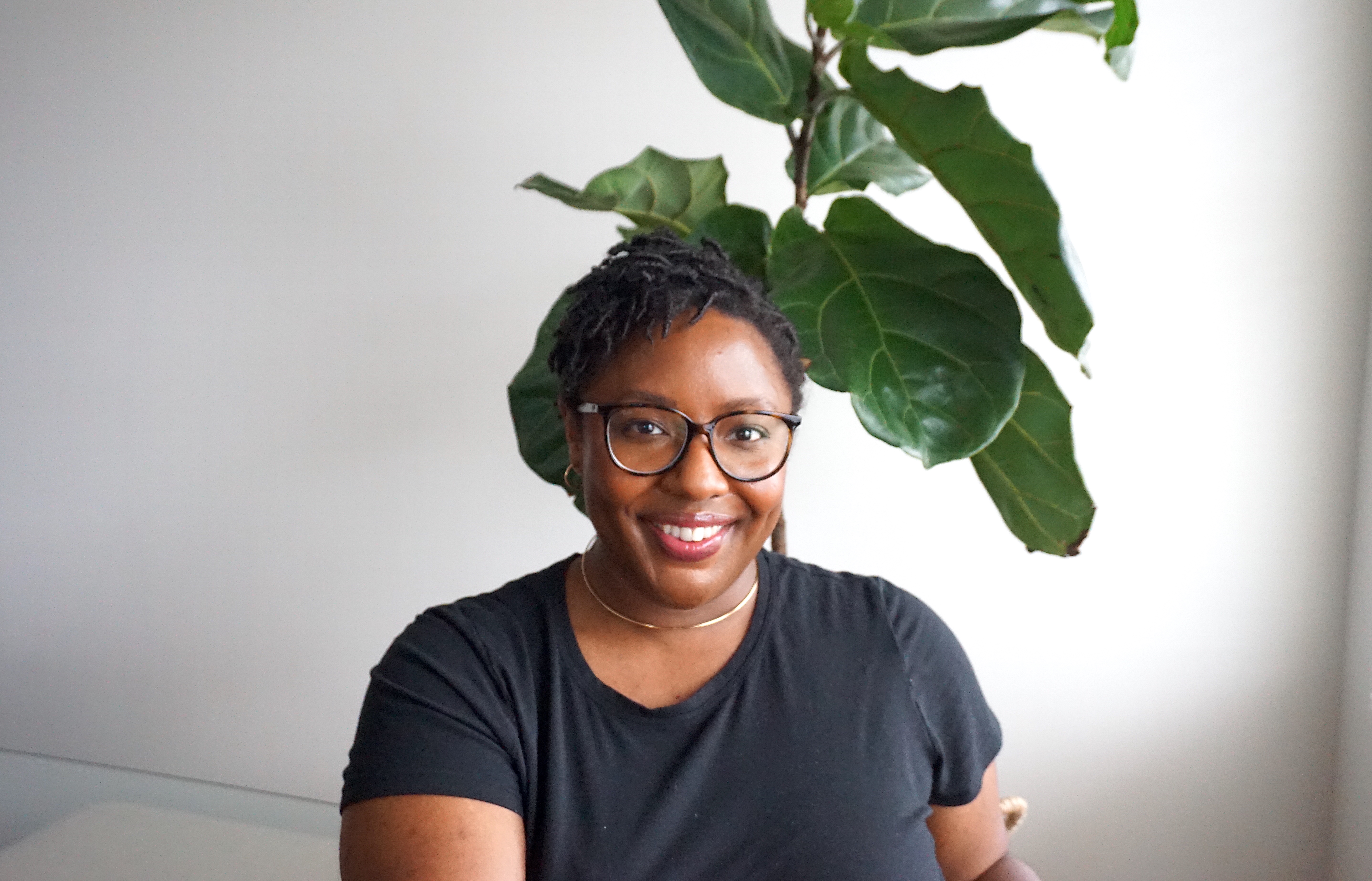
Jovonna Jones is a writer and cultural historian from Greater Boston.
She is an Assistant Professor of English and African & African Diaspora Studies at Boston College, specializing in visual culture, Black feminisms, and the built environment. Her articles have appeared in Aperture, Boston Art Review, Callaloo, Souls, and Southern Cultures, along with essays in Fragments of a Crucifixion (MCA Chicago), Picturing Black History (Abrams Books), and LaToya M. Hobbs: Carving Out Time (Harvard Art Museums). Jovonna is a 2024-2025 ACLS Fellow, and a 2024-2025 resident fellow at the Newhouse Center for Humanities at Wellesley College. She has previously held fellowships from Dartmouth College, the Edmond and Lily Safra Center for Ethics, and the Andrew W. Mellon Foundation. She holds her PhD and MA from Harvard University and BA from Emory University, each in African American Studies.
Her current book project, The Last Thanksgiving at West Rutland Square, interprets housing struggle through the lens of one Boston resident displaced from her home after living in her neighborhood for nearly half a century. The story unfolds from an archival discovery. In 1982, a tenants group took a real estate developer to court over their historic brownstones located in Boston’s South End, home to migrants across the Black diaspora since the turn of the century. The developer planned to convert the tenants’ low-rent apartments into luxury condos for a growing market of white professionals. Rather than acquiesce to the sale, the tenants sued–and won. But they were evicted anyway. Few of them received their full settlement payout. The tenants’ story had been buried for decades until 2016 when Jovonna found the case in the personal papers of the group’s president: her grandmother Mary Brown. Brown kept a detailed record of their activism, revealing a defiant side of her life that her own family never knew. She kept photographs from her last week on West Rutland Square, culminating in a Thanksgiving meal before moving out the next day. By the time Jovonna discovered these records, late-stage dementia diminished Brown’s memories and she could no longer tell her story. The brownstones themselves still stand, boasting renovated million-dollar condos and climbing market rents. They bear no traces of the residents who fought to stay there as the South End gentrified around them. Weaving extensive archival research, family storytelling, and visual re-memory, Last Thanksgiving meditates on Black life in a radically transforming Boston and recovers the lens of an ordinary resident uprooted by urban growth.
Selected Writing
“A Rooming House for Transient Girls: Black Women’s Spatial Vision in the Black Metropolis” in Southern Cultures
“Making and Mobilizing Art in Times of War” in Picturing Black History: Photographs and Stories that Changed the World (Abrams Books)
“Developing a Movement: How the Polaroid Revolutionary Workers Movement Used Printed Matter to Protest Apartheid” in Boston Art Review
“Walking with Ella: Photography, Interiority, and the Spiritual Church Movement in the Work of Gordon Parks” in Southern Cultures
“Flint is Family in Three Acts by LaToya Ruby Frazier (Review)” in Aperture
“Troubling Dignity, Seeking Truth: Black Feminist Vision and the Thought-World of Black Photography in the Nineteenth Century” in Souls: A Critical Journal of Black Politics, Culture, and Society
“A Visual Record of Black Lives, Four Decades After Emancipation” on Aperture.org
“Now Found: On Faith and Wonderment in Deana Lawson’s Messier 81, Return of the Dove” in Fragments of a Crucifixion (MCA Chicago)
“look, look. look: The Work of Black Aesthetics in Toni Morrison’s Jazz” in Callaloo
“Energy Charts and Cosmic Light: Working between portraiture and documentary, Khalik Allah’s new book tracks Harlem by night” in Aperture Photobook Review 014
 Jovonna Jones